Showing posts with label biology. Show all posts

Monday, 11 August 2014

My opinion on Ebola


In society, the general consensus is that we trust scientists. Well, you would think we do anyway. I recently saw a tweet (on twitter, obviously) that said panicking about Ebola despite scientists saying there's no reason to is silly and that when it comes to real threats like Global warming, we choose to ignore them. Why is this?

If we actually listened to the scientists (you know, the experts) instead of the media, there might not be so much panic. The media feed off giving people terrible news and watching us all fall apart, because that's how they get attention and make money. Whilst Ebola is a real virus and can have devastating effects, scientists have repeatedly informed us that it is not as widespread as the media may make us believe. So far there have been reports of Ebola taking people's lives and as awful as this is, it does not mean we are all going to die. Remember the whole bird flu thing and how civilisation survived? Yeah, me too. #BirdFluSurvivor.

The recent outbreak started in West Africa. I've noticed that the media has focused a lot on 'What happens if it comes to the USA/UK?'. The countries in West Africa that it has so far affected do not have the same medical facilities as we have. The lack of medicine, running water and care all contribute to the spread of the disease and that is why countries such as Guinea and Sierra Leone are so unfortunate in contracting Ebola. If we do want to make sure that there are no more outbreaks of the virus, then the true answer is not to invent a new vaccine every time there's an outbreak but to tackle the lack of facilities and treatment in less economically developed countries where diseases spread more easily. I believe it's a political issue as much as a scientific one. We are very lucky to live in economically developed countries where we have a better chance of survival.

Personally, my favourite thing about this whole Ebola malarkey is that the media don't tell us what it actually is, only that we should be deathly afraid of it. You think that you should be able to trust the news however the exaggeration of morbid facts is the only thing they are concentrating on. Giving statistics of how many people have died is just a way to make people scared. Ebola is a virus that makes people ill and in some cases can be fatal. It is simply that. Whilst focusing on Ebola statistics we forget that there are far more deadly diseases in the world. How many people die due to Malaria each year? I was reading the World Health Organisation's 2013 Malaria report and found:

  • 97 countries had ongoing Malaria transmission in 2013.
  • 3.4 billion people are at risk of Malaria. 
  • There were 207 million cases of Malaria and 627000 deaths.  
These facts are shocking, yet we're so used to them that we don't worry. The main point is that we are scared of the unknown. In places such as the UK, it's rare that we come across diseases such as Ebola, so when we do there is uproar. However we've all learnt about malaria at school, we know it exists and how it's transmitted and what the effects are. We also know that in the UK we aren't really at risk from it, so why worry about it? 

Basically, I believe there are more threatening things out there than Ebola. I mentioned previously that one of these is Global Warming. So, if you do want a scientific topic to panic about, it's Global Warming, that pesky little issue we all choose to ignore that actually poses a real threat. Personally, I'm no expert on global warming. However if you want to read more, please visit Becky's blog at:

http://prettysciencestuff.blogspot.co.uk/2014/07/bad-media-and-climate-change.html
She writes a lot about Earth Science and animals, so if you're into that, she's definitely worth following.
:-)


WHO Malaria Report 2013

Thursday, 7 August 2014

Preconceptions of a Scientist

Whenever people ask me what I study at University and I tell them I'm a chemistry student, I usually get responses along the lines of:

 'Wow, you must be really intelligent!' or 'Ooh, aren't you a clever girl?', (which is possibly the most patronising comment ever).

My own personal favourite is 'Oh, but you're so pretty!', simply because it's unrelated to my field and I still can't figure out whether it's a compliment or an insult.

I've recently discussed what people perceive scientists to 'look like', however my experience has told me that these preconceptions of scientists are much more complex than simply appearance. I've even had medicine students ask me what I study and when I tell them they respond with something like 'Eww really? Chemistry's so hard. You must be so clever.' I wanted to remind them that they study medicine, the most competitive University course there is. People have this idea that all scientists are genius' (what is the plural of genius?!) and we sit at desks all day scribbling down complex equations. This may be true of some scientists, who are extremely intelligent and probably make the rest of us look a little dim, however we're not all Einstein and I think this is where the preconceived idea comes from. Einstein is the most well known scientist on Earth and probably the first person people think of when they imagine a scientist. Therefore I think people's thought process is something along the lines of:

Einstein = Scientist, therefore if you are a scientist you must be on the same level as Einstein! Which I know on a personal level isn't true. I am most definitely not a genius. Sure, I have a brain like everyone else, but I am a scientist because I love science and I enjoy it and that is the reason I am good at it. Not because I have an IQ of 1 billion. (Disclaimer: I'm pretty sure you can't have an IQ of 1 billion.)

I think a lot of careers have stereotypes but those of people in STEM subjects are actually quite damaging and I think is one of the reasons there is a lack of women in these fields. Take the 'Big Bang Theory'. It's a funny show and I love it, but when I look at characters like Amy Farrah Fowler, I wonder if I would have chosen a career in science if I had grown up with her character. Probably not. Fortunately I'm lucky enough to know that most female scientists aren't like her at all. Mayim Bialik who plays Amy, is a real representation of a women in science! She's amazing and funny and beautiful with a passion for the subject; she's a true inspiration. However Amy is frumpy, socially awkward and perceived as 'boring'. Maybe I'm taking this too seriously but she really doesn't represent the majority and personally, I don't know anyone like her which makes me wonder where this stereotype comes from.

Yes as scientists,we are a little geeky but we like to have fun as much as anyone else. We love the Universe and the origin of it, we love the Earth, we love the organisms that inhabit the Earth, we love invisible forces the act on you and the atoms and molecules that make up everything. We love the chemicals whizzing around your brain as you're reading this. In general, we love life and the origins of life. How can you possibly say that's boring?

Friday, 25 July 2014

My love for Science museums

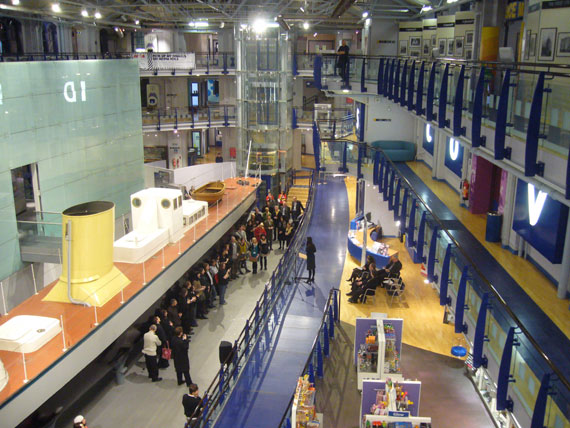
During my time in Newcastle, the most outstanding place I have visited has been the Centre for Life. Situated in Times Square, Newcastle upon Tyne the centre attracts around 250,000 visitors a year and is the 'largest provider of school science workshops in Europe'.

Curiosity Zone
The centre provides all sorts of activities including the 'Curiosity Zone' where science activities are provided to children, along with instructions' (sometimes) but the actual aim of the activity is not given. The curiosity zone aims to replicate research and development and compares research to a 'formal sort of play'. I fully agree, as all scientific research involves some playing around with concepts or reactants; the path is never straightforward and and the target almost never met first time around. I really loved the idea of leaving children to make what they wanted of the equipment provided and explore it for themselves without an adult telling them what they should be doing. Each child approached activities in a different way and had different ideas of what they 'should' do or what the equipment was used for. It's a great way to inspire budding scientists and give children an opportunity to 'think like a scientist'.


Some of the activities on offer in the Curiosity zone included 'The Reactable', a table where you can create sound using programmed shapes. The sound can then be adjusted by placing other shapes next to those already laid on the table, as the pucks interact with each other. Hence by using the process of placing shapes carefully and adjusting and fine-tuning the sounds you want, you can create a digital musical masterpiece. The Reactable aims to encourage creativity and curiosity and all in all is fun to play around with. 
 A video of me dancing to our own musical masterpiece. I have some seriously groovy dance moves going on that I sincerely apologise for. 


When I first got there I was already extremely excited, but my excitement got taken to a whole new level when I saw that one of the exhibitions on show was 'BODY WORLDS vital', which is an exhibition by Dr. Gunther von Hagens, using real human bodies. Dr von Hagens invented the technique of plastination in 1977 whilst working as an anatomist in Germany and the exhibition is approved by the Human Tissue Authority. To see real human bodies and the amazing things they are capable of is truly fascinating. Real people may donate their bodies to plastinated after they pass away and although this may seem a little grim, the result is a display of amazing exhibits informing the audience of how the human body works and how to live a healthy lifestyle. Samples of healthy lungs compared to those with emphysema and lung cancer can be seen and it's shocking to see how much damage you are capable of doing to your body. Although a lot of people are initially unsure about the exhibition, it is there to spread a good message about the importance of life. Of course photographs are not allowed to be taken inside the exhibition, after all these are people's bodies and must be respected, so I took a picture of the poster instead.

I also visited the centres Planetarium, however I'll leave this for the next blog post as I've been fortunate enough to visit two planetariums in two days, so I'll leave the awesome space stuff for later. :-)


Wednesday, 23 July 2014

North-East Adventures

Kielder Water
So I'm currently sat in my boyfriend's bedroom in Wallsend after the most incredible week of sightseeing and new experiences, and I still have another five days here. I went camping for the first time, which was fab and the toilet block had Dyson Airblades which I'm a huge fan of and I imagine it's rare for a campsite to have such luxurious hand-drying facilities. If anyone wishes to visit said campsite with fabulous toilets I'll leave the link below. We camped just outside of Bellingham (which I learnt is NOT pronounced Belling-ham) at Boe Rigg campsite. The area is amazing, there's so many beautiful sites to see, including Kielder Water and Forest Park. Being the science fanatic I am, I of course wanted to visit the observatory but unfortunately all events were fully booked. I will visit one day when the skies are clear. :-)

If you're a fan of conservation and wildlife, there are many species that can only be seen in this part of the country, including red squirrels.  Kielder is home to 50% of the native red squirrel population and much information can be found about the conservation work being done to protect this beautiful species. Also to be seen are Ospreys, some of the most fascinating birds of prey.

Discovery Museum
Yesterday I visited the Discovery Museum in Newcastle, the first science museum in Britain to be built outside of London. The place is vast with so much to 'discover', literally; I could have spent all day in there. There is an exhibit which takes you through the history of the Newcastle, from the Romans building Pons Aelius to the modern day. Of course, my personal favourite was the science maze. The maze takes you through the basics and fundamental concepts of science including: forces, how sound travels, electricity, and light and vision just to name a few. There are activities to try throughout the maze such as a ball game involving magnets and seeing how much electricity you can generate simply by completing a circuit using your hands and how the voltage increases when your hands are moist. It's a brilliant way for young people to gain  an interest in science; there were so many little children bewildered by making their own circuits and standing in front a kaleidoscope mirror. It's lovely to know that this brilliant exhibition might inspire one of these young children to take up science. The gift shop is also filled with sciencey goodness, I especially wanted the crystal growing kit. :-)

I still have to visit the Centre for Life and the Great North Museum amongst other things, so I'll write a little review of those next week.

Boe Rigg campsite

Kielder Water and Forest Park

and for any astronomy enthusiasts: Kielder Observatory

Discovery Museum

Tuesday, 8 July 2014

Science and the education system.

For a while now, people have been talking about why there aren't many girls taking the sciences at A-level, especially physics. I sometimes think that I regret not taking physics at A-level as it's a subject I really enjoy now and it would have helped me hugely during my first year of University. However, the more I think about it, I realise that I didn't choose physics because physics A-level looks extremely boring. I'm not saying that physics is boring; I find it fascinating, especially learning about the origin of the planets and why we're here but at the time of choosing my A-levels, I couldn't think of a more mind-numbing course. I think this opinion can be extended to the majority of the sciences at A-level, as to pass the exams you don't even need to understand key concepts, simply memorise them, throw in some key words and BAM, you've got full marks. Well done you.

Chemistry is obviously my favourite subject, but even I didn't find the syllabus or the way of "learning" during A-level chemistry inspiring at all. Instead of focusing on why certain complexes produce gelatinous precipitates and the chemistry behind this, you simply had to remember to write down the word 'gelatinous' in the exam and you would be fine. I knew this wasn't learning. Okay, there's always going to be key concepts and words that you need to remember because they're important, but the idea behind science qualifications like this isn't understanding, it's memorisation and that's not what science is about. How are young people and especially girls supposed to pick these A-levels when there are no real-life applications behind them? Simply saying 'This is this, accept it. Oh and remember to write this word in your answer.' is not representative of the problem-solving and creative thinking that many scientists use on a day to day basis. This is why I didn't choose physics at A-level. I really didn't enjoy it as a subject at school because I couldn't relate to it. The only part of physics I enjoyed at school was learning about nuclear fission and radioactive decay as we were given actual examples of this. I think when it comes to science, the way you learn is by hands-on experience, not sitting and memorising. Thankfully, I had a brilliant teacher who actually studied chemistry at Uni (a rarity these days) and hence was really enthusiastic about the subject and always throwing in anecdotes and random facts related to what we were learning. I don't hesitate to say that if it wasn't for him, my love for chemistry probably wouldn't have developed as much as it did.

The way A-levels are taught kind of sets you up for failure when you reach University. All of a sudden you have vast amounts of information thrown at you and you quickly realise that memorising it all will be impossible and that's where I suddenly realised that I didn't know how to learn. Thankfully, there are a lot more practical sessions at Uni and these are what most helped me learn the concepts we were introduced to in lectures. My scores in my lab sessions have been consistently high throughout both semesters, simply because I enjoy them and I get to 'do stuff' whether it be carrying out a recrystallisation or playing around with chlorine gas (I use the word 'playing' loosely. Please don't play with chlorine gas.). All in all, the way A-levels and even GCSEs are taught makes science seem like very boring fields, when actually they are amazing and I can't imagine doing anything other than a science degree.

Thursday, 3 July 2014

Learning something new..

About a month ago it suddenly dawned on me that after my exams had finished I had three months in which to do nothing. I'm not the kind of person who can sit and watch daytime TV for three months so I decided I would use my time wisely and broaden my scientific horizons now all uni work is complete. Coursera is an online company that offers open online courses. The courses are run by their respective universities and institutions from all over the globe offer their courses to be taken online for free. Coursera offers courses covering a variety of subjects and interests including: the sciences, humanities, business, technology, maths and the arts.

Link to Coursera's website

Seeing that all the available courses could be taken for free, I decided to step away from chemistry and sign up for a course titled 'Genes and the Human Condition (From Behaviour to Biotechnology)' offered by the University of Maryland. I was always interested in Biology and really enjoyed it at A-level, especially genetics and the genome etc. so I thought why not? The course is six weeks long and began on the 23rd of June. Each week, there are six web lectures to watch which are complimented by six weekly quizzes. During the 3rd and 6th week, there are online exams to complete. Coursera is a really good learning platform as you have a week to complete the corresponding lectures and quizzes and so this gives you the freedom to learn in your own time and at your own pace. It's also different to university lectures as the lectures are online and so you can go back and watch them over and over again. My course also provides useful links to relative current research, which is fabulous and provides you with a real-life application, so to speak. 

I've recently completed my first week and I loved it. The lectures are short and snappy and a lot of information is thrown at you very quickly, which you get used to as time goes on. So far, we have covered the structure of DNA and the basics of the genome. Also covered, was one of my favourite topics, mutations. Mutations fascinate me as they are completely random and can have the effect of being neutral, advantageous or disadvantageous and many mutations may be expressed in your phenotype. For example the point mutation in the Beta-globin chain of haemoglobin in people with sickle-cell anaemia. A single nucleotide is replaced with another, giving rise to different interactions between nucleotides and hence a different overall structure, which cause the red blood cells to be sickle shaped. In biology, structure affects function and the function of these red blood cells are affected. Of course, this mutation is disadvantageous but fascinating none the less.

One lecture I found particularly interesting was about the use of flies in biotechnology. Flies are often referred to as 'tiny little people' as although their genome contains many less genes than our own, they can be used to study the effects of mutations and to study behaviour. Interestingly, I discovered that when flies are sexually rejected, they drink alcohol and can become light-headed, much like humans. They also display aggression and can experience insomnia, meaning drugs for these conditions in humans may be tested on flies.

I am thoroughly enjoying the course and I can't wait for the upcoming weeks. Yay for science. 
Follow my blog with Bloglovin