
Showing posts with label education. Show all posts
Showing posts with label education. Show all posts
Tuesday, 31 March 2015
The Process of Recovery
I AM BACK.
I haven't blogged in ages and I feel kinda bad about it because I enjoy it, so why haven't I been doing it?
Well, the reason is, lately I've been a little ill. My depression and anxiety came back with a vengeance in January (not fun) which means that I had to postpone my January exams after having a panic attack in my Organic Chemistry exam (definitely not fun). So you could say the last couple of months haven't been too great, but I think I'm starting to move forward a little and come up with more effective ways of coping, ie. wine does not work, however good it tastes. I think I'll write a blog post soon on how I've come up with these ideas and basically my experience in recovery and what works for me and what doesn't.
It's currently the Easter holidays, (or vacation as my Uni calls it - eugh) and so I have a little more time to start writing again and share more science-y things. I've also realised since I stopped blogging for a while, just how useful and beneficial it is to me and to my health. Having a little rant about something and distracting yourself from your own mind is a good thing sometimes. :)

Tuesday, 4 November 2014
Exciting things to come!
I haven't written a blog post in almost a month which is very unlike me, so I thought I would update you on what is happening in my bubble.
I've got some really exciting events coming up, thanks to Fran at Social Sheffield. - We're going to TedX Sheffield where there are going to be some amazing speakers (I've already been researching and googling them), then the week after I'm attending an event here in Sheffield called 'Celebrating Modern Feminism' hosted by Laura Bates, who is the founder of the Everyday Sexism Project. Fingers crossed that because we have press passes, we may get to do a quick interview with her. (It's a feminists dream!).
Also coming up is the Stemettes Hackathon this weekend, which I am volunteering at. I got a press pass for the event, but the Stemettes kindly Dm'ed me on Twitter and asked me if I want to volunteer as well, which is lovely of them. I'm excited to throw myself into the world of code, it'll be fun to learn something new!
Uni wise, revision has begun.
I REPEAT. REVISION HAS BEGUN.
It's that time already. I feel as if I've been back for five minutes but it's only 2 months until exams and this year I'm determined to ace them. I can do it! :-)
Saturday, 11 October 2014
ScienceGrrl: Science is for Everyone
On the 8th October, I went along to the Arts Tower at the University of Sheffield to attend the first inaugural lecture titled 'Science is for Everyone' by ScienceGrrl's Sheffield branch.
The lecture began with Jen Lewis (founder of ScienceGrrl Sheffield) asking people to picture a typical scientist and engineer, something I have written about before here. Jen then showed a picture of Ada Lovelace and asked the audience if anyone knew who she was. It's safe to say that not many people did (or they were being extremely shy!). The lecture itself was arranged to coincide with Ada Lovelace day on 14th October, which is a celebration of the achievements of women in science. Ada is often associated with being the worlds first computer programmer after sketching out programs and plans for something called the 'Analytical Engine', which was essentially an early version of the modern computer.
 |
| Ada Lovelace Day - 14th October |
Professor Rodriguez-Falcon has spent her career dedicated to helping those with a disability through her knowledge of engineering. Someone with a 'disability' may not just be someone who was born with a physical/mental disability, as she explained that we all become disabled in one way or another as we age. She showed that the number of elderly people with a physical disability will be 50% of the population by 2020. As our strength and dexterity deteriorate as we get older, it becomes harder to do day to day chores and clever engineering solutions are the way to overcome this. Elena's talk was incredibly inspiring and it was extremely helpful of her to give an insight into what you can do with engineering and how helpful it can actually be to people. When you say the word 'engineering' people often think of cars or aeroplanes and vehicles, but actually it is so much more than that and the career possibilities you can get from engineering are endless.

We then heard from some PhD students from the University, all ScienceGrrls and hence involved in STEM subjects. They were kind enough to talk us through their research and all four of them were involved in entirely different fields:
- Firstly we heard about the subject of Bone Regeneration and the engineering behind aiding the recovery of broken bones through inserting a material between the gaps in the broken bone to speed up recovery.
- The second short talk was on Additive Manufacturing, or 3D printing as we all know it. The technology behind 3D printing is extremely cool, not only because you can make a 3D replica of your own face (really!), but really thin slices of material in any shape needed can be produced by the printer. This is very useful for the Medical, Automotive and Consumer Industries.
- We then heard from Priya, a member of Sheffield's NeuroGirls, who was researching Vasomotion and the dilation and constriction of arteries in the body. She told us that vasomotion is extremely useful in medicine as it can help predict whether a patient is developing a disease, before the disease is actually apparent.
- Lastly, we heard from another ScienceGrrl, Steph, who began as a chemist who was interested in environmental chemistry and is now an environmental engineer studying groundwater and the microbiology to clean up groundwater after petrol leaks. I found her talk most interesting as I think I could relate to it most, however all of the girls were absolutely amazing and so passionate about their fields and projects.
At the end of the lecture, there was time for questions:
The first question asked Professor Rodriguez how she decided what kind of engineering she wanted to study. Elena replied that she didn't actually know what career she wanted, so she chose mechanical engineering as it is a very broad field and she decided it would be best for her as she could specialise later if she wanted to. Some of the other ScienceGrrls also said this and some said they 'fell' in to engineering; it wasn't their initital career plan but they discovered that they really enjoyed finding practical solutions to problems faced in the world.
Following questions discussed the gender imbalance in engineering subjects at University and in Industry. Elena was quick to reassure people that she had never experienced discrimination even whilst working at a company where she was the only woman amongst 200 men. She said that the actual problem is not the vast number of boys in STEM, but the number of girls not taking STEM subjects.
'That's not to say we're not awesome.
We are brilliant!'
- Professor Elena Rodriguez-Falcon on the lack of women in engineering
I had the most enjoyable evening at the lecture and I hope it inspired all of the younger people in there to study STEM at University. It was really good to see people of different ages and there were more boys there than I expected there to be, which was amazing to see. I really hope ScienceGrrl Sheffield hold more events like this at the Uni. I'd like to thank them all for giving up their time to share their knowledge and passion with us. You're an inspiration.
Tuesday, 7 October 2014
Difficult Decisions
When I first applied for University, I wanted to do a year in Industry as I thought this would help improve my employability prospects and make me stand out. I'm now in my second year and have been preparing to send applications to companies etc. However, no matter hard I try, I can't quite find it in me to send them. It has been overwhelming (and not in a good way).
In the last few days, something has dawned on me. I'm not cut out for this and it's just not for me. This has knocked me sideways as I've always been the kind of student who has 'succeeded' at everything and given things a try even if I didn't really want to because I knew it would be good for me in the long run. Now this has come along and a multitude of factors is making me dread my year in Industry. Recently my mental health hasn't been tip-top so I'm really worried about spending a year alone in a random place with no one to go home to cry to (really). Also, I've realised that I actually kind of don't want to do this. It's an entire year of my life that I will be spending doing research and development or some other activity. A year is a long time and seeing as I'm unsure whether I want to do it right now, what happens if I have to spend an entire year there and I hate it?
I'm still really confused as to whether I should move 'down' on to the straight MChem course and so I've written some lists of pros and cons:
Pros of staying on the Industry course
- Return to Uni in fourth year with more lab experience
- Be more employable
- A year free of exams
- It looks good on my CV
Cons of staying on the Industry course
- I don't really want to do it
- My mental health isn't that great at the moment
- The stress of actually applying
- Having to complete uni modules whilst working 9-5 at a company
Looking at these lists it's almost clear to me what decision to make, however being told I can 'move down' to the straight MChem course is something that I don't like to hear. People treat it like I would be taking a step backwards and be less of a successful scientist and I don't know if I can take that idea, as I've always been the kind of student who has been good. I've always been the best, and I don't quite know how to cope with not being the best and not succeeding at something. I can't quite grasp the idea that maybe this course is not for me, because I've never experienced that before and I suppose I'd feel a bit like a failure.
Any advice is appreciated, as I'm sure you'll guess, I'm a little clueless.
Any advice is appreciated, as I'm sure you'll guess, I'm a little clueless.
Friday, 26 September 2014
Having the Passion to Succeed
I've discovered in the last year that to truly be successful at what you do, exam grades and tests are not the most important thing. Sure, they may have an effect on what courses you can apply for, but there is something way more powerful than exam scores.
At the end of my first year of University, I had to achieve a 60% average in my core modules. I scraped through with 62.5%, not my proudest moment, especially as I didn't actually achieve anything higher than a 2:2 in any of my summer exams. I was actually surprised by my own reaction to this. If it had been a couple of years ago at A-level, I probably would have had a meltdown and cried. Instead, I simply planned how to improve and how to win over companies that I would be applying to the following year. At this moment in time, I don't have the greatest exam record at Uni, my results are nothing special, but I intend to make them so. I have passion.

My passion for my subject is what drives me to do well and succeed. I'm not the kind of student who gets by by doing the bare minimum and although my results aren't the greatest, my love for my subject extends beyond the boundaries of the syllabus. I go out and meet people, network and share my excitement with other people and in a way, I think that makes me more of a scientists than amazing grades do. I love attending events where I get to meet fellow scientists, learn something new and be part of it all. Learning is my favourite thing. I spend hours in the library, not because I have to but because I want to and one day I will be where I want to be.
I may not be the most intelligent person on my course, but I am the most passionate and I will never give up. Follow my blog with Bloglovin
At the end of my first year of University, I had to achieve a 60% average in my core modules. I scraped through with 62.5%, not my proudest moment, especially as I didn't actually achieve anything higher than a 2:2 in any of my summer exams. I was actually surprised by my own reaction to this. If it had been a couple of years ago at A-level, I probably would have had a meltdown and cried. Instead, I simply planned how to improve and how to win over companies that I would be applying to the following year. At this moment in time, I don't have the greatest exam record at Uni, my results are nothing special, but I intend to make them so. I have passion.
I may not be the most intelligent person on my course, but I am the most passionate and I will never give up. Follow my blog with Bloglovin
Tuesday, 23 September 2014
Standing Out
As part of my degree course, I spend a year out in Industry doing research and completing my own projects. After this, I return to Uni for a year where I have to give a presentation and write a report on my experience. Obviously part of the terrifying preparation for this, apart from attending multiple meetings and careers events, is writing a CV.
CVs are difficult to write, especially today because there are less jobs available and hence less work experience for you to actually put on your CV. It's a vicious cycle. I spent my first year trying to compile a list of things that I could put on my CV and make me stand out from the crowd and help convey my passion for my subject. Here are my tips for students on how to write an awesome CV:
CVs are difficult to write, especially today because there are less jobs available and hence less work experience for you to actually put on your CV. It's a vicious cycle. I spent my first year trying to compile a list of things that I could put on my CV and make me stand out from the crowd and help convey my passion for my subject. Here are my tips for students on how to write an awesome CV:
(This is kind of focussed around my CV as a science student, however you can tweak it accordingly to fit your subject if needed)
- An Amazing Introduction - This really needs to grab the reader's attention and show them why you want the job and why you're passionate. Simply stating that you need and job and you have good people skills isn't going to make you look amazing. You want to be remembered. Make sure your personal statement isn't too long, you need to leave room for the bulk of your CV. To write this section, I basically pretended I was writing my UCAS personal statement again and then shortened it and made it more specific to the job market rather than University.
- Work Experience - If you don't have any work experience, try volunteering as it's really good to put on your CV as it shows you've taken time out of your own life to help someone else. Where relevant, try and link your work experience to skills that you may need in the position you're applying for or to the job itself. e.g. I worked at a hair salon for two years and I linked this to working with chemicals when writing my own CV.
- Education - When writing my CV in preparation of applying for placements, I didn't list all my GCSEs (as they sometimes tell you to at school). It wastes space and after all, they know I passed my GCSEs, I'm at Uni. Simply saying that you have grades in Maths, English and Science is enough. I did however list my A-level grades as they're a bit more recent. You can also put in Uni module grades if you have them.
- Interests - I think this is quite a hard one as you don't want to make it the bulk of your CV, however you shouldn't really just put that you like 'reading' or 'going out with friends'. Try and expand on it and say what you are truly interested in. This part doesn't have to link back to the job role as it's an extension of your personality and should reflect the type of person you are.Try and make it personal (but not too personal y'know) e.g. My CV contains my own interests which I have listed as drawing, particularly hyperrealism and portraits. I also mention that I am interested in SciComm and therefore have joined ScienceGrrl, I am a STEM ambassador and I write a blog to discuss topics that interest me.
Last-minute tips
- Try to make your CV a representation of you and your passion, don't try to make it like everyone else's.
- Don't base your CV on ones you find on the internet. It's fine to look at layout, but you might be tempted to copy parts of it that maybe don't really apply to you or the kind of work you want
- Spell check it. Otherwise it's probably a little embarrassing.
- Keep it updated. If you do something interesting related to your subject write it down and remember it. You'll probably find that you have a lot more to write on your CV than you initially thought.
- Keep a good relationship with your referees and ask them before putting their details on your CV, it's a bit rude if you don't.
Sunday, 14 September 2014
New Adventures
I have exciting news. From now on I will still try to blog regularly, however I have new ventures that I am about to embark upon.
I recently met the Creative Director of an organisation called Social Sheffield. After being spotted on twitter, I was asked to meet up with them to discuss how they could support my aims and passions. Social Sheffield have their own site, where they advertise events and activities going on in the Sheffield area. They also support restaurants, bars etc and have Food, Culture and Music twitter accounts covering all kinds of entertainment and events. Recently, they have been wanting to set up an Education section, where educational activities can be posted in the hope that the people of Sheffield will be more drawn in to going to these kind of events. Anyway, I met up with Social Sheffield and I will now be tweeting from their Education account as well as my own personal account. They have offered to let me be their Education Editor and hopefully in due course I will be able to write articles for their online magazine which is currently under maintenance.

It's all very exciting and has happened so quickly. I can only hope that I'm good at it and who knows where this could lead? :-)
My Social Sheffield Twitter
The Social Sheffield Twitter
I recently met the Creative Director of an organisation called Social Sheffield. After being spotted on twitter, I was asked to meet up with them to discuss how they could support my aims and passions. Social Sheffield have their own site, where they advertise events and activities going on in the Sheffield area. They also support restaurants, bars etc and have Food, Culture and Music twitter accounts covering all kinds of entertainment and events. Recently, they have been wanting to set up an Education section, where educational activities can be posted in the hope that the people of Sheffield will be more drawn in to going to these kind of events. Anyway, I met up with Social Sheffield and I will now be tweeting from their Education account as well as my own personal account. They have offered to let me be their Education Editor and hopefully in due course I will be able to write articles for their online magazine which is currently under maintenance.
It's all very exciting and has happened so quickly. I can only hope that I'm good at it and who knows where this could lead? :-)
My Social Sheffield Twitter
The Social Sheffield Twitter
Wednesday, 3 September 2014
What's it like to be in the Lab?
With so many people starting University soon I thought I would share what a typical day at Uni is like for me. Recently quite a few people have asked me 'What do you actually do, Gina?' So here, I'll talk you through what happens in a first year lab.

With no thanks to popular culture, people often think that as chemists we make a lot of meth. That's only partially true*. Being in the lab is nothing like cooking with Walt, although the technicians are just as fixated on health and safety as him. That's the first thing you learn, before you're even allowed anywhere near the lab is health and safety. *Cue 10 year old Powerpoint with images of horrific scarring*. Being in the lab is dangerous and potentially lethal, which kind of makes it fun, but let's face it, no one wants to be stripped and put under the emergency shower in the corner of the room.
Preparation for labs can be quite dull with quizzes and questions to answer and research to do, however they're really valuable and I can't imagine going into the lab not knowing what to do, especially because my first year lab teacher was incredibly intimidating when he wanted to be.
In first year, our lab sessions began at 10.00am and finished at 4.00pm, which seems like a really long time to be stood in the same room, however as soon as you begin a science degree you learn that nothing in science is ever 'quick'. Experiments are time-consuming and sometimes there is nothing to do but wait around for the rotary evaporator to finish, but in general those six hours were spent rushed off our feet. Usually, there is something that can be done. I've discovered that organic labs are possibly the worst simply because there is so much to do in such a short space of time, however the write-ups are fairly easy and vice-versa with physical chemistry labs.
Setting up glassware and finding missing glassware occupies the first ten minutes of labs, you learn that people never put things back in the right place. In my first year we got a lab manual which had instructions, we simply had to follow these instructions and were expected to think about the chemistry behind the experiment and why we were doing it. Labs always link to something you're learning or will learn so having the practical application of what you're taught in lectures helps you learn and improve your skills. We have PhD students who help us with the experiments and give us advice. A lot of time is spent talking to them in the hope that they pass their wisdom onto you; they're like majestic chemistry unicorns, always there to save the day.
Undergraduate labs are so different to being at school, you get to play around with loads of cool new equipment and machines, things you'd previously never heard of and are worth thousands of pounds. Learning to use a rotary evaporator is one of those skills that once you've mastered you feel like a proper chemist. IF YOU CAN USE A ROTARY EVAPORATOR, YOU CAN DO ANYTHING. Well, you feel that way. It's just fun to learn how to use equipment you'd previously only seen on TV. Also, there's always a sense of panic in the room when you're using a dangerous chemical for the first time. It's thrilling yet terrifying to know that you are handling something that has the power to kill you and when you use it successfully without killing anyone you feel a great sense of achievement. I was absolutely terrified the first time I used chlorine gas in the lab, but I've learnt that handling potential dangerous gases and compounds is all part of being a competent chemist. Plus I love going home to my flatmates and telling them that I worked with a chemical warfare agent.
Here's my tips/advice if you're starting a Uni course that involves labs:
- Always wear safety glasses or you will get shouted at.
- Don't worry about getting your lab coat dirty, you look more experienced if it's covered in substances. Although you probably should wash it at some point.
- Make use of PhD students/Older students/Technicians, they know lots of valuable stuff, and sometimes they might tell you the answer ;)
- Your feet WILL ache after standing up for so long. After a lab go home, put your pyjamas on, make a cup of tea and mentally recover from what's just happened to you.
Also useful is my Surviving the First year of Uni post I wrote a while ago.
Thursday, 28 August 2014
A summer of Learning
I haven't been blogging as regularly as I would like to lately, but I've been busy travelling all over the country this summer. I'll be back up and blogging properly on Saturday as that's when I return from my holiday and will have an actual laptop to type posts up on (using my phone is quite fiddly). This summer, I've definitely explored more of my interests and also things that i didn't previously take any interest in or didn't know anything about.
I've almost finished reading 'An astronauts guide to life on Earth' by Chris Hadfield and so an in-depth review of that is coming up as its one of the best books I've ever read. As I said, I've been exploring new fields this summer and so an influx of very mis-matched posts are to be expected. It's all part of the fun though. :-)
I've almost finished reading 'An astronauts guide to life on Earth' by Chris Hadfield and so an in-depth review of that is coming up as its one of the best books I've ever read. As I said, I've been exploring new fields this summer and so an influx of very mis-matched posts are to be expected. It's all part of the fun though. :-)
Friday, 22 August 2014
Useful Books for Undergraduate Chemistry Students
I love books, like really love books. If you're starting University and studying the physical sciences, I've devised a list of books that may be useful in your first year of University. Every Uni has their own list of recommended reading but obviously not all lists will contain the same books, so I've taken some books that my department recommended and some I discovered myself, that have been really helpful/interesting, so I hope this is of some use if you want to get some books together before starting your course. :-)


- This book is awesome. It may say that it's for A level Chemistry, but it's full of exercises and calculations that cover all aspects of Chemistry. It's really good for revising your maths skills and working through problems. It also has example problems at the beginning of each chapter so you know how to calculate the answers yourself and it's just really useful if you want to revise answering calculation questions. You can buy it here: Calculations for A-level Chemistry
- Another Maths book specifically for those undergraduate students studying the chemical sciences without having done A level maths. Again, example problems are given and it covers everything you will cover in your first year maths catch-up lectures. Covers lots of different topics such as differentiation, integration and matrices. You can buy it here: Maths for Chemistry
- Oxford Chemistry Primers are really helpful. They are small books each focussing on a specific topic in Chemistry and will contain some information that may not be given to you in lectures. They're really good for outside reading, are concise and informative and on the whole, easy to understand. I didn't buy before starting my first year and I really wish I had because generally, the University library will only have a few copies of each and they are really good! I've recently invested in a few to begin my second year and plan on taking them on holiday with me to begin some pre-Uni reading. Just search for Oxford Chemistry Primers on Amazon and there are tonnes of them. Some are more expensive than others and I'm unsure why, but I think I got mine for about a penny each. You can't go wrong.

- Who says all educational books have to be text books? If you're studying a subject like chemistry, one topic you will cover in your first year will be the structure of atoms and quantum mechanics. It's difficult to get your head around at first because it's like nothing you've ever encountered before and it always reminds me of the famous quote: "If you think you understand quantum mechanics, you don't understand quantum mechanics." This is where Brian Greene comes in. 'The Fabric of the Cosmos' is a brilliant book. It really helped me understand quantum mechanics, probability and Heisenberg's Uncertainty Principle. It's also really good if you're interested in concepts such as time and space etc. Amazon have it here: Fabric of the Cosmos
There are so many useful books out there to aid you in your university course and don't be afraid to try those that aren't textbooks; sometimes they're more helpful as they have a more personal approach and examples you can relate to. :-)
Monday, 11 August 2014
My opinion on Ebola
In society, the general consensus is that we trust scientists. Well, you would think we do anyway. I recently saw a tweet (on twitter, obviously) that said panicking about Ebola despite scientists saying there's no reason to is silly and that when it comes to real threats like Global warming, we choose to ignore them. Why is this?
If we actually listened to the scientists (you know, the experts) instead of the media, there might not be so much panic. The media feed off giving people terrible news and watching us all fall apart, because that's how they get attention and make money. Whilst Ebola is a real virus and can have devastating effects, scientists have repeatedly informed us that it is not as widespread as the media may make us believe. So far there have been reports of Ebola taking people's lives and as awful as this is, it does not mean we are all going to die. Remember the whole bird flu thing and how civilisation survived? Yeah, me too. #BirdFluSurvivor.
The recent outbreak started in West Africa. I've noticed that the media has focused a lot on 'What happens if it comes to the USA/UK?'. The countries in West Africa that it has so far affected do not have the same medical facilities as we have. The lack of medicine, running water and care all contribute to the spread of the disease and that is why countries such as Guinea and Sierra Leone are so unfortunate in contracting Ebola. If we do want to make sure that there are no more outbreaks of the virus, then the true answer is not to invent a new vaccine every time there's an outbreak but to tackle the lack of facilities and treatment in less economically developed countries where diseases spread more easily. I believe it's a political issue as much as a scientific one. We are very lucky to live in economically developed countries where we have a better chance of survival.
Personally, my favourite thing about this whole Ebola malarkey is that the media don't tell us what it actually is, only that we should be deathly afraid of it. You think that you should be able to trust the news however the exaggeration of morbid facts is the only thing they are concentrating on. Giving statistics of how many people have died is just a way to make people scared. Ebola is a virus that makes people ill and in some cases can be fatal. It is simply that. Whilst focusing on Ebola statistics we forget that there are far more deadly diseases in the world. How many people die due to Malaria each year? I was reading the World Health Organisation's 2013 Malaria report and found:
- 97 countries had ongoing Malaria transmission in 2013.
- 3.4 billion people are at risk of Malaria.
- There were 207 million cases of Malaria and 627000 deaths.
These facts are shocking, yet we're so used to them that we don't worry. The main point is that we are scared of the unknown. In places such as the UK, it's rare that we come across diseases such as Ebola, so when we do there is uproar. However we've all learnt about malaria at school, we know it exists and how it's transmitted and what the effects are. We also know that in the UK we aren't really at risk from it, so why worry about it?
Basically, I believe there are more threatening things out there than Ebola. I mentioned previously that one of these is Global Warming. So, if you do want a scientific topic to panic about, it's Global Warming, that pesky little issue we all choose to ignore that actually poses a real threat. Personally, I'm no expert on global warming. However if you want to read more, please visit Becky's blog at:
http://prettysciencestuff.blogspot.co.uk/2014/07/bad-media-and-climate-change.html
She writes a lot about Earth Science and animals, so if you're into that, she's definitely worth following.
:-)
WHO Malaria Report 2013
Thursday, 7 August 2014
Preconceptions of a Scientist
Whenever people ask me what I study at University and I tell them I'm a chemistry student, I usually get responses along the lines of:
'Wow, you must be really intelligent!' or 'Ooh, aren't you a clever girl?', (which is possibly the most patronising comment ever).
My own personal favourite is 'Oh, but you're so pretty!', simply because it's unrelated to my field and I still can't figure out whether it's a compliment or an insult.
I've recently discussed what people perceive scientists to 'look like', however my experience has told me that these preconceptions of scientists are much more complex than simply appearance. I've even had medicine students ask me what I study and when I tell them they respond with something like 'Eww really? Chemistry's so hard. You must be so clever.' I wanted to remind them that they study medicine, the most competitive University course there is. People have this idea that all scientists are genius' (what is the plural of genius?!) and we sit at desks all day scribbling down complex equations. This may be true of some scientists, who are extremely intelligent and probably make the rest of us look a little dim, however we're not all Einstein and I think this is where the preconceived idea comes from. Einstein is the most well known scientist on Earth and probably the first person people think of when they imagine a scientist. Therefore I think people's thought process is something along the lines of:
Einstein = Scientist, therefore if you are a scientist you must be on the same level as Einstein! Which I know on a personal level isn't true. I am most definitely not a genius. Sure, I have a brain like everyone else, but I am a scientist because I love science and I enjoy it and that is the reason I am good at it. Not because I have an IQ of 1 billion. (Disclaimer: I'm pretty sure you can't have an IQ of 1 billion.)
I think a lot of careers have stereotypes but those of people in STEM subjects are actually quite damaging and I think is one of the reasons there is a lack of women in these fields. Take the 'Big Bang Theory'. It's a funny show and I love it, but when I look at characters like Amy Farrah Fowler, I wonder if I would have chosen a career in science if I had grown up with her character. Probably not. Fortunately I'm lucky enough to know that most female scientists aren't like her at all. Mayim Bialik who plays Amy, is a real representation of a women in science! She's amazing and funny and beautiful with a passion for the subject; she's a true inspiration. However Amy is frumpy, socially awkward and perceived as 'boring'. Maybe I'm taking this too seriously but she really doesn't represent the majority and personally, I don't know anyone like her which makes me wonder where this stereotype comes from.
Yes as scientists,we are a little geeky but we like to have fun as much as anyone else. We love the Universe and the origin of it, we love the Earth, we love the organisms that inhabit the Earth, we love invisible forces the act on you and the atoms and molecules that make up everything. We love the chemicals whizzing around your brain as you're reading this. In general, we love life and the origins of life. How can you possibly say that's boring?
Monday, 4 August 2014
Mental Health and University
This post is a little off the topic of science, however I feel it's important to discuss it.
Mental Health. It's a tough one and sometimes it's incredibly difficult to talk about. I was someone who didn't discuss anything that was going on in my head for a very long time and as a result, I made myself much worse. University can also be a particularly stressful environment to be in. Deadlines, lectures to attend, meetings, etc. can really get on top of you. But don't worry, there is help at hand. Most universities are so used to dealing with mental health issues and will have a full network of people dedicated to helping people just like us. So here are my tips for coping with a mental illness at University.
How to cope when people aren't supportive.
This is probably my area of expertise and is quite personal, but I'll share it because I know there will be someone who is going through the same. To explain: I told one of my close (close) family members about my depression. This was probably one of the worse decisions I ever made. Whilst I acknowledge that you simply can't understand depression without experiencing it yourself, they really do not understand and some of their comments have made me feel even more depressed. From simple comments like 'Pull yourself together' and 'Why do you look so miserable? For God's sake cheer up!' to things that are much worse and I don't wish to repeat.
When you're trying to recover from a mental illness, it's not helpful in any way to be around people like this, regardless of how much you may love them. I sometimes dread coming home from University simply because I know my anxiety levels and depression will go through the roof, my self-harming also gets much worse. But this summer I have devised my own strategy for coping, which can only be good. :-)
Mental Health. It's a tough one and sometimes it's incredibly difficult to talk about. I was someone who didn't discuss anything that was going on in my head for a very long time and as a result, I made myself much worse. University can also be a particularly stressful environment to be in. Deadlines, lectures to attend, meetings, etc. can really get on top of you. But don't worry, there is help at hand. Most universities are so used to dealing with mental health issues and will have a full network of people dedicated to helping people just like us. So here are my tips for coping with a mental illness at University.
- Seek Help - I mean it. Don't do what I did and try and manage it by yourself for years on end and don't be too proud to go to the Doctor's. It's absolutely nothing to be ashamed of. If you think about it, you probably wouldn't be ashamed of going to your GP with an ongoing physical illness, would you? So be brave and seek the help you need and deserve. :-)
- Medication can be good - Sometimes your Doctor will suggest putting you on medication to alleviate some of the symptoms of your illness. This isn't always a bad thing. At first when my GP suggested putting me on Citalopram, this filled me with fear. I didn't like the idea of relying on a tablet to make me feel better and I wondered what I would do when I was taken off them. This was rather silly of me. Whilst I acknowledge that medication isn't for everyone, it can help. It doesn't cure your illness, but can help you feel well enough to tackle it and take steps to recover. Personally, I think they're worth a try if needs be, as I don't think that I would have been brave or have felt well enough to go to my counselling appointments if I didn't have my medication to give me that boost in mood.
- Let people know - This is important. Like, really important. Let your lecturers and tutor know as well as your friends and flatmates if you feel close enough to them. You may be able to get extended deadlines on assignments or extra help if you need it. Whilst your course guides may not be experts on mental health, they do want you to pass your course and be willing to help you do that. If you have an extended period of time off, it's also easier to explain if they know about your illness before hand.
- Socialise - Even though Uni is possibly the most social place on Earth, it's easy to let your thoughts and illness get the better of you and hide yourself away. No good will come of this. Believe me, because I did it. The more you get yourself out there and talk to people, the more friends you will make, and potentially build a greater network of people who can support you and help you.
- Relax - I am someone who finds it incredibly difficult to relax. I panic and worry about every situation bad or good and this really isn't needed when you're at University and you already have enough to do. Try and be organised and get assignments done on time so you can have some time to yourself to relax.
- Try not to drink too much - At University you will most probably be surrounded by alcohol. But if you have a mental illness, alcohol isn't going to help. I enjoy a drink occasionally but I try to avoid getting drunk as alcohol is a depressant and obviously won't help you overcome illnesses like depression. Look after yourself. Also, some medication advises that you don't drink, so it's probably not best to take your medication and then go and get smashed.
How to cope when people aren't supportive.
This is probably my area of expertise and is quite personal, but I'll share it because I know there will be someone who is going through the same. To explain: I told one of my close (close) family members about my depression. This was probably one of the worse decisions I ever made. Whilst I acknowledge that you simply can't understand depression without experiencing it yourself, they really do not understand and some of their comments have made me feel even more depressed. From simple comments like 'Pull yourself together' and 'Why do you look so miserable? For God's sake cheer up!' to things that are much worse and I don't wish to repeat.
When you're trying to recover from a mental illness, it's not helpful in any way to be around people like this, regardless of how much you may love them. I sometimes dread coming home from University simply because I know my anxiety levels and depression will go through the roof, my self-harming also gets much worse. But this summer I have devised my own strategy for coping, which can only be good. :-)
- Get out of the house as much as possible - I see my friends, other family members or just go for a walk on my own. I try to do this everyday, just to have time to myself and clear my head. Also the fresh air really helps with managing my depression.
- Ignore comments - This is the most difficult one. Whenever someone makes an ignorant comment or is unsupportive in any way, try to ignore them. I have let so many hurtful comments get to me and make me feel much worse about myself. To deal with it, I like to imagine that I have a physical illness and that person has just made the exact same comment. Would they make that comment if you were physically ill, probably not. Whilst not letting it define you, you are allowed to acknowledge that you're ill and that people are sometimes ignorant.
- Find Hobbies - Since I have been around the house a lot more this summer as I don't currently have a job. I have found that keeping hobbies helps distract me if I feel down. There also great to hide in your room with if people aren't being supportive and you're finding them difficult to be around. I think the best hobbies are something that involves your full attention so you can properly distract yourself from potential situations that could make you feel worse. One of the reasons I set up my blog was precisely this, to escape when I need to. I love writing and discussing things I'm passionate about, so this really helps. I also read and if all else fails, clean. Cleaning is really good to take your attention away from things.
- Remember to keep a network of people who are supportive. If you don't have anyone, there are some great organisations out there who can help alleviate loneliness and make you feel better. Some good ones are: Mindfull, Black Dog Tribe, Sane, Student Minds, Time to Change, and loads more.
These are my main strategies for coping around unsupportive people (especially those you can't escape from). I hope they are useful in some way. :-)
Saturday, 2 August 2014
What does a scientist look like?
Whilst reading the latest issue of Chemistry World, a monthly magazine I receive for being a member of the Royal society of Chemistry, I came across an article about Martyn Poliakoff, a professor of Chemistry at the University of Nottingham. He is the foreign secretary of the RSC, meaning he has an influential role in the international business of the Royal Society. Despite this, he is most famous for his insightful and entertaining Youtube videos on the channel 'Periodic Videos'. Poliakoff and his team at Nottingham worked to produce informative videos on every element in the periodic table and have now moved on to even cooler chemistry concepts and experiments such as heating up Creme Eggs (an absolute must-see) and the classic experiment; the Iodine clock.
Professor Poliakoff himself is the epitome of your 'stereotypical scientist', his wild grey hair and glasses make him the received idea of a scientist we've all come to know. But, as Poliakoff states 'Part of my mission is to show that not all scientists look like me'. Whilst Poliakoff acknowledges his own appearance, he makes viewers aware that there are people out there in the field of science who do not look like him at all. His team at the University of Nottingham comprises of men and women of different backgrounds and ages. It is good that he acknowledges the stereotype and recognises that there needs to be more diversity. His work in Ethiopia has been invaluable in getting more African scientists into the international community and he has said 'My long term vision is that Ethiopian scientists should go to an international conference and nobody should think it surprising'. He is truly an ambassador for diversity.
When you picture a scientist you probably think of an old man with crazy Einstein-like hair and glasses, wearing a white lab coat, not unlike Professor Poliakoff. Whereas if you look at real people who have careers in STEM fields, they come in all shapes and sizes, different ethnic backgrounds and of course, different sexes. I believe that challenging the stereotypical image of a scientist is the one of the most effective ways to introduce more diversity into the fields. If you have this view of what someone in a chosen career path 'should' look like then you are alienating everyone who doesn't look that way. Therefore, girls and ethnic minorities may be less inclined to take up science if they are unable to see how they 'fit in' and if there is no one who they can relate to. The image of a scientist we have all grown up with is an ageing white man, yet first and foremost, a scientist is a person, someone with passion and curiosity. That's it. These preconceptions of what a scientist is, damages the opportunity to diversify the scientific industry. I am glad that there are people like Martyn Poliakoff in the world who want to confront this out of date vision.
Obviously, I am passionate about getting more girls into STEM subjects and I just wanted to let any girl reading this know that you can be a scientist/engineer/mathematician, regardless of your appearance. Science doesn't care about how you look, it cares about your mind and how you think and your passion for the subject. People shouldn't be scared of following their dreams because they can't relate to the image of what they should be. There are so many fabulous female scientists and organisations, such as the Stemettes, who promote diversity and gender equality in the field, so why are we still stuck on this grey haired character who is so obsolete in today's society? The days of balding men in suits sat round a table discussing gravity is long gone. It's time to make way for a new 'face of science', one that represents all cultures and backgrounds.
Heating a creme egg.
Professor Poliakoff himself is the epitome of your 'stereotypical scientist', his wild grey hair and glasses make him the received idea of a scientist we've all come to know. But, as Poliakoff states 'Part of my mission is to show that not all scientists look like me'. Whilst Poliakoff acknowledges his own appearance, he makes viewers aware that there are people out there in the field of science who do not look like him at all. His team at the University of Nottingham comprises of men and women of different backgrounds and ages. It is good that he acknowledges the stereotype and recognises that there needs to be more diversity. His work in Ethiopia has been invaluable in getting more African scientists into the international community and he has said 'My long term vision is that Ethiopian scientists should go to an international conference and nobody should think it surprising'. He is truly an ambassador for diversity.
When you picture a scientist you probably think of an old man with crazy Einstein-like hair and glasses, wearing a white lab coat, not unlike Professor Poliakoff. Whereas if you look at real people who have careers in STEM fields, they come in all shapes and sizes, different ethnic backgrounds and of course, different sexes. I believe that challenging the stereotypical image of a scientist is the one of the most effective ways to introduce more diversity into the fields. If you have this view of what someone in a chosen career path 'should' look like then you are alienating everyone who doesn't look that way. Therefore, girls and ethnic minorities may be less inclined to take up science if they are unable to see how they 'fit in' and if there is no one who they can relate to. The image of a scientist we have all grown up with is an ageing white man, yet first and foremost, a scientist is a person, someone with passion and curiosity. That's it. These preconceptions of what a scientist is, damages the opportunity to diversify the scientific industry. I am glad that there are people like Martyn Poliakoff in the world who want to confront this out of date vision.
 |
| I'm a scientist! No grey hair to be seen! |
Tuesday, 29 July 2014
Planetariums, Stars and Spacecraft..
In today's society, we spend a significant proportion of our lives staring at television and computer screens trying to keep up with the world. By doing this we often forget to look at our own planet, especially the sky. If you're new to physics and all this space-y stuff (as I am), then a planetarium is a great way to explore the skies and learn about the feats of mankind in exploring the planets, whilst remaining warm.
I was lucky enough to visit two planetariums whilst on a recent trip to Newcastle and both were equally fabulous. First, I visited the Centre for Life which I have mentioned in a previous blog post, where I watched a short film titled 'Back to the Moon for Good'. The film faded in to millions of stars and you felt like you were floating in outer space, miles away from civilisation. Amazing graphics took you on a journey through the cosmos and told you the story of the first moon landing and why no one has been back since.
Debts and austerity mean days of exploring planets are the last thing on governments minds as obviously getting to the moon isn't the most cost-effective enterprise. However, the Google Lunar XPrize, initiates the race to the moon once again. 33 teams from all over the world must build a spacecraft which can successfully land on the moon, travel 500 metres across the surface and send images back to Earth. The best part? The teams expenses must be no more than 10% government funded, meaning getting to the moon on a budget! Who knows, one of these teams may revolutionise rocket building as we know it and design a cheaper way of sending spacecraft into orbit, meaning more missions could take place. Exciting stuff. The deadline of the competition is December 31st 2015 which really isn't that far away. It's brilliant that people from all over the world can have a go at sending something they have designed themselves into the skies. Many teams rely on volunteers to aid the success of their project, and it gives a chance for people not originally from the field of physics to get involved. The film showed that one team member was a neuroscientist who compared the building of a rocket to the human brain and all the processes that go on are delicately intertwined. I cannot convey how much it made me want to be a physicist (and this is coming from a chemist). The winning team will receive the grand prize of $20 million and I imagine will go down in history. Since watching the film, I've been reading a lot about the respective teams and all of them have chosen different ways of approaching the challenge and comprise of different scientists and engineers from different fields; it's truly inspiring.
Whilst also in the North-East, I visited the Great North museum, previously the Hancock, which also blew me away with it's planetarium. You have to pay for the planetarium at this venue, but it's not expensive at all. I paid £1.95 for a film titled 'Dawn of the Space Age' which was around 40 minutes long. Not bad at all, and totally worth it! In 'Dawn of the Space Age' you relive space exploration, starting from the first time an artificial satellite was launched, through the space race where the Soviet Union and the USA battled to see who could get into space first. The Soviets won with the launch of Sputnik 1 in October 1957, and the battle continued to outdo each other, resulting in the USA's Apollo 11 landing in 1969, whereby the first humans set foot on the moon. As someone who has only recently developed an interest in space and doesn't really know much about space travel, it was enlightening and entertaining to be taken through the growth and advancements of spacecraft through the ages. Being the feminist that I am, I only have one issue with the film and that was that much emphasis was placed on the first man on the moon, but not on the first woman in space. Valentina Tereshkova was the first woman in space and was on board the Soviet's 'Vostok 6' which launched 16th June 1963. The Great North has many other planetarium shows available to watch and I thoroughly recommend visiting any planetarium. Learning about space is fascinating and opens up so many questions that you want to find the answers to. It's great if you're an inquisitive individual.
I was lucky enough to visit two planetariums whilst on a recent trip to Newcastle and both were equally fabulous. First, I visited the Centre for Life which I have mentioned in a previous blog post, where I watched a short film titled 'Back to the Moon for Good'. The film faded in to millions of stars and you felt like you were floating in outer space, miles away from civilisation. Amazing graphics took you on a journey through the cosmos and told you the story of the first moon landing and why no one has been back since.
 |
| Google Lunar XPRIZE |
Whilst also in the North-East, I visited the Great North museum, previously the Hancock, which also blew me away with it's planetarium. You have to pay for the planetarium at this venue, but it's not expensive at all. I paid £1.95 for a film titled 'Dawn of the Space Age' which was around 40 minutes long. Not bad at all, and totally worth it! In 'Dawn of the Space Age' you relive space exploration, starting from the first time an artificial satellite was launched, through the space race where the Soviet Union and the USA battled to see who could get into space first. The Soviets won with the launch of Sputnik 1 in October 1957, and the battle continued to outdo each other, resulting in the USA's Apollo 11 landing in 1969, whereby the first humans set foot on the moon. As someone who has only recently developed an interest in space and doesn't really know much about space travel, it was enlightening and entertaining to be taken through the growth and advancements of spacecraft through the ages. Being the feminist that I am, I only have one issue with the film and that was that much emphasis was placed on the first man on the moon, but not on the first woman in space. Valentina Tereshkova was the first woman in space and was on board the Soviet's 'Vostok 6' which launched 16th June 1963. The Great North has many other planetarium shows available to watch and I thoroughly recommend visiting any planetarium. Learning about space is fascinating and opens up so many questions that you want to find the answers to. It's great if you're an inquisitive individual.
Friday, 25 July 2014
My love for Science museums
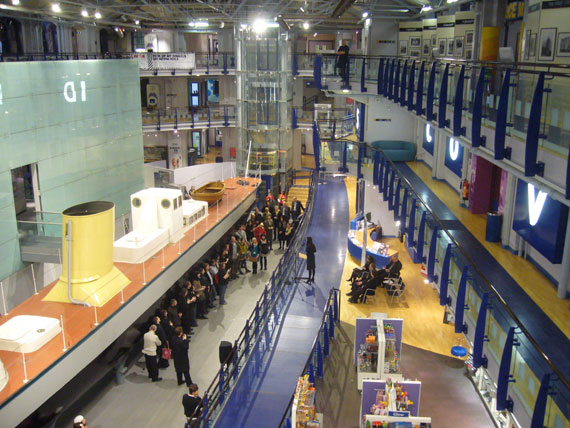
During my time in Newcastle, the most outstanding place I have visited has been the Centre for Life. Situated in Times Square, Newcastle upon Tyne the centre attracts around 250,000 visitors a year and is the 'largest provider of school science workshops in Europe'.
 |
| Curiosity Zone |
The centre provides all sorts of activities including the 'Curiosity Zone' where science activities are provided to children, along with instructions' (sometimes) but the actual aim of the activity is not given. The curiosity zone aims to replicate research and development and compares research to a 'formal sort of play'. I fully agree, as all scientific research involves some playing around with concepts or reactants; the path is never straightforward and and the target almost never met first time around. I really loved the idea of leaving children to make what they wanted of the equipment provided and explore it for themselves without an adult telling them what they should be doing. Each child approached activities in a different way and had different ideas of what they 'should' do or what the equipment was used for. It's a great way to inspire budding scientists and give children an opportunity to 'think like a scientist'.
 Some of the activities on offer in the Curiosity zone included 'The Reactable', a table where you can create sound using programmed shapes. The sound can then be adjusted by placing other shapes next to those already laid on the table, as the pucks interact with each other. Hence by using the process of placing shapes carefully and adjusting and fine-tuning the sounds you want, you can create a digital musical masterpiece. The Reactable aims to encourage creativity and curiosity and all in all is fun to play around with.
A video of me dancing to our own musical masterpiece. I have some seriously groovy dance moves going on that I sincerely apologise for.
 When I first got there I was already extremely excited, but my excitement got taken to a whole new level when I saw that one of the exhibitions on show was 'BODY WORLDS vital', which is an exhibition by Dr. Gunther von Hagens, using real human bodies. Dr von Hagens invented the technique of plastination in 1977 whilst working as an anatomist in Germany and the exhibition is approved by the Human Tissue Authority. To see real human bodies and the amazing things they are capable of is truly fascinating. Real people may donate their bodies to plastinated after they pass away and although this may seem a little grim, the result is a display of amazing exhibits informing the audience of how the human body works and how to live a healthy lifestyle. Samples of healthy lungs compared to those with emphysema and lung cancer can be seen and it's shocking to see how much damage you are capable of doing to your body. Although a lot of people are initially unsure about the exhibition, it is there to spread a good message about the importance of life. Of course photographs are not allowed to be taken inside the exhibition, after all these are people's bodies and must be respected, so I took a picture of the poster instead.
I also visited the centres Planetarium, however I'll leave this for the next blog post as I've been fortunate enough to visit two planetariums in two days, so I'll leave the awesome space stuff for later. :-)
Wednesday, 23 July 2014
North-East Adventures
 |
| Kielder Water |
If you're a fan of conservation and wildlife, there are many species that can only be seen in this part of the country, including red squirrels. Kielder is home to 50% of the native red squirrel population and much information can be found about the conservation work being done to protect this beautiful species. Also to be seen are Ospreys, some of the most fascinating birds of prey.
 |
| Discovery Museum |
I still have to visit the Centre for Life and the Great North Museum amongst other things, so I'll write a little review of those next week.
Boe Rigg campsite
Kielder Water and Forest Park
and for any astronomy enthusiasts: Kielder Observatory
Discovery Museum
Wednesday, 16 July 2014
The downfalls of being indecisive
I am a very indecisive person, I always have been. So much so, that my family shout at me because I take so long to choose food in a restaurant. This indecisiveness is not helping the fact that I need to start looking at companies to do my third year placement at.
My course is 'MChem Chemistry with a year in Industry', so in third year I spend my time at a chemical company and I work for them for an entire year. The first issue to tackle was the sector of chemistry I wanted to go into. I enjoy inorganic and organic chemistry the most but my grades in inorganic have been higher, so I decided I wanted to go into inorganic to explore a little more about the things that have interested me, such as transition metal complexes and colour chemistry. I like the fact you're guaranteed to have pretty coloured products in inorganic, as childish as that sounds and I also really love inorganic labs at Uni.
My exam results really haven't been the greatest and I know I could have done better, however I've had a pretty tough year with being diagnosed with depression and bereavements etc. so I was quite happy to finish first year with a 2:1. This is pretty much the minimum to be able to get an industry placement so I'm quite nervous that I'm not going to be good enough. All I can do is smash it next year.
Recently, I've been looking into companies to apply to and at this moment in time, just thinking about it makes me anxious and nauseous. On one hand I can't imagine living on my own for a year away from everyone else at Uni, but at the same time I am secretly excited (just a minute bit though). I want to go somewhere I'll really love; after all, I will be working 9am-5pm, five days a week. The worst part is having to have an idea of where I want to work by September as I need to start applying, but at the moment, I'm totally not ready for this.
Sunday, 13 July 2014
Being a girl.
As a girl, from the very first moment that you begin to walk and talk you are bombarded with images of what you are supposed to be. Toys, clothes, everything is pink. Possibly the sickliest colour known to man dominates our life and choices, even as a child. If you've ever been to 'Toys R Us', you will completely understand what I am about to say. From the moment you step into the shop, you immediately know which are the 'girls' toys and which are the boys. The shop is split into two distinct colours; one aisle bright pink, the next blue. As you wander down the 'girls' aisle it's easy to understand why girls as young as five worry about their weight [1] as stick-thin dolls line the shelves in provocative clothing.
Although these toys are not labelled as being for 'girls' or 'boys' it's easy to understand where the stance of the companies that make these toys lie. The simple message is 'Girls, if it's not pink you shouldn't be playing with it.' and for a child, that is an incredibly confusing concept. Why should your choice of toy depend on the colour of it? And since when did being a girl mean you were attracted to all things shiny and sparkly? They're girls, not magpies. To look into this I went on the 'Toys R Us' website to look at the marketing used to ploy young children and make them make choices that aren't really their own.

 I thought looking at the 'dress-up costumes' might give me an idea of the gender stereotypes placed on children, and they did. This image shows a 'boys' pirate costume placed directly above a 'girls' wedding dress. I believe that these gender stereotypes effect both boys and girls, however in this case I think it's much more damaging to girls. I couldn't find one 'girls' dress-up costume of a builder or a scientist or a police officer, but there were plenty of wedding and princess dresses. Not only does it limit the roles girls think they can play, but I know first hand that if you're the kind of girl that isn't into this stuff, it makes you feel like an outcast. I went to a fancy-dress party when I was about seven where all the girls went as Disney princesses/Angels/Mermaids and I went as Lara Croft. I loved it but everyone else just thought I was a weird kid dressed all in black and wielding toy guns, including the parents who found it quite amusing and made comments about my choice of costume. This amongst other things was damaging to myself esteem.
This was the next thing I found which sparked interest. Why does the 'boy' get to wear the army costume whilst the girls wear tiaras and play with a Disney Princess kitchen. Really. A DISNEY PRINCESS KITCHEN. My seven year old self would much have preferred the army costume, but again the message is that danger and adventure are for boys and girls can um, stay in the kitchen like the good little princesses they are. There were so many other toys I found that restricted boys and girls to gender stereotypes and conveyed the message that pink is girly and not for boys. Since when can you make toys masculine or feminine? They're pieces of plastic designed to be played with, but they are capable of sending out such damaging messages.
This video was made by 'PinkStinks', a campaign with the objective to raise awareness of the stereotyping that goes on in the designing and manufacturing of children's toys. They believe both boys and girls are at risk of the stereotyping and this may limit their future career and life decisions. Their intention is to reverse the 'pinkification' of toys and girlhood and promote positive body-image and self-esteem for young girls. Although this video is a couple of years old now, I think it's still very much relevant today. From my own personal experience, I don't believe that marketing the shiny pink plastics toys to girls and gearing them away from science and engineering has gotten any better. In fact, I believe it's worsened as we're continually becoming more obsessed with the way women look and the roles they play in society, which impacts young girls greatly. The more focus we put on how girls look, the more we drive the same young girls away from anything that could be seen as masculine. The challenge of removing these gender stereotypes is key to increase girls confidence, get more girls into fields of work where women are vastly under represented and instil a confidence in girls whereby they have dreams and aspirations, but not just to be a princess.
[1] APPG on body image.
Subscribe to:
Posts (Atom)